Why Meta Stock Is Soaring: 3 Clear Reasons You Need to Know Right Now

On July 1st alone, Meta’s stock shot up 9% in a single trading session. So what exactly did Meta (META) do to send Wall Street into a frenzy? Simply saying “it’s because of AI” doesn’t cut it. There were three distinct catalysts behind this surge — and understanding each one is essential if you want to read where Meta is headed next.

Reason #1: Meta Is Monetizing Its Excess AI Servers — Enter “Meta Compute”
On July 1st, Meta announced it would rent out its surplus computing power to outside customers — triggering that jaw-dropping 9% single-day stock surge. The news of Meta entering the cloud business under the banner of “Meta Compute” rattled the market in the best possible way. This move puts Meta in direct competition with Amazon, Microsoft, and Google’s cloud platforms, and signals a fundamental redefinition of Meta: from social media giant to AI infrastructure provider.
Zuckerberg told Bloomberg he believes the AI cloud business is “quite reasonable,” and CNBC’s Jim Cramer confirmed that Meta plans to sell its excess computing capacity to outside companies. The company is reportedly weighing two approaches: providing access to its own AI models, or selling raw computing power outright.
Why does this matter so much? Because it single-handedly dissolved investor anxiety about Meta’s massive AI infrastructure spending. In a world where AI computing demand far outpaces supply, monetizing surplus compute capacity creates a brand-new revenue stream that reduces Meta’s dependence on advertising. Investors have started viewing Meta’s enormous AI capex not as a liability, but as a future profit engine — and that shift in perception is everything.
Reason #2: The Ads + AI Combination Is Delivering Real Results
Advertising remains Meta’s core revenue driver — but AI is supercharging it in measurable ways. In Q4, Meta’s ad impressions grew 18% year-over-year, and stronger ad performance drove a 6% increase in average price per ad as advertiser demand climbed.
Instagram Reels watch time in the U.S. jumped more than 30%, while Facebook also posted double-digit growth in video watch time. The longer users stay on the platform, the more ads they see — and the more revenue follows. Daily active users of AI-powered media creation tools tripled year-over-year in Q4, and combined annualized revenue from video generation tools reached $10 billion.
On top of that, “Meta Business Agent” — an AI-powered business messaging service — is emerging as a compelling new subscription revenue model. More than one million businesses are already using AI agents on WhatsApp and Messenger to handle customer service around the clock.
Reason #3: Meta’s Own AI Model “Muse Image” Promises Serious Cost Savings
On July 7th, Meta unveiled its own image-generation AI model called “Muse Image,” designed specifically for creators and advertisers — sending the stock up another 3%-plus. Developed by Meta’s superintelligence lab under Alexandre Wang, the model automates the creation of customized visual content for advertisers, positioning itself directly against OpenAI and Google.
Having a proprietary model means Meta can cut costs on third-party AI services while also using it to auto-generate ad creatives across Instagram and WhatsApp. It’s a two-for-one: higher ad pricing potential and lower operating costs — a genuinely powerful combination for margins.
How Wall Street Is Sizing Up Meta Right Now
Meta stock has surged roughly 26% year-to-date, easily outpacing the Nasdaq 100’s approximately 9% gain and the S&P 500’s roughly 6% rise. Cathie Wood’s ARK Invest recently trimmed its AMD position and added to Meta — a clear signal that institutional money is repositioning Meta as the top AI beneficiary play.
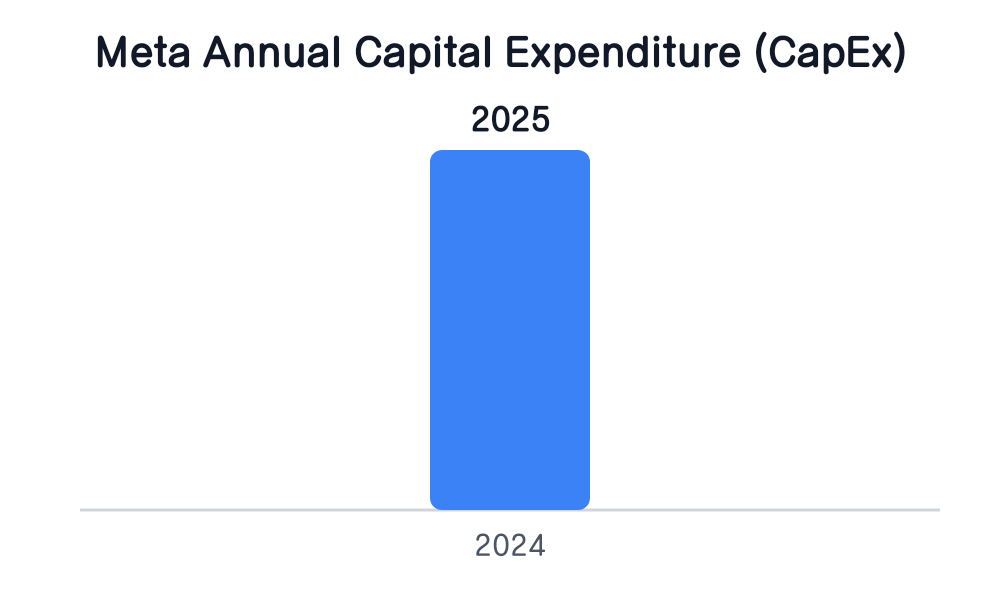
That said, risks remain. Needham analyst Laura Martin flagged that Meta’s 2025 capital expenditures could climb 84% to around $68 billion, raising legitimate concerns about whether those investments will translate into proportional returns. If the AI infrastructure spending doesn’t produce concrete revenue, bubble talk will resurface quickly. But if Meta Compute gains traction, that massive capex suddenly transforms from a concern into a competitive moat — and that’s precisely the thesis the market is betting on right now.
How Should You Approach Meta Stock at This Point?
- Three growth engines are firing simultaneously: ad revenue, AI cloud services, and proprietary AI models. That’s a rare setup.
- After a sharp run-up, profit-taking pressure is real — a dollar-cost averaging or phased buying approach makes more sense than chasing the price.
- Meta’s Q2 earnings report, expected in late July, will be the next major inflection point. Watch ad revenue growth and any updates on the Meta Compute rollout closely.
- If TikTok regulatory pressure heats up again, Meta’s Reels stands to be a significant beneficiary of any resulting user migration.
Sources
- Meta Stock Surged 9% to $612.91 on July 1 After Reports That Mark Zuckerberg Is Building a Cloud Business — The Motley Fool
- Mark Zuckerberg’s Meta Stock Surged 9% on New Cloud Business Plan — Yahoo Finance
- Meta Unveils Proprietary Image Generation AI Model ‘Muse Image’ — Stock Up 3% — Edaily
- Meta Platforms: Can the Rally Continue After a 25% Gain in 2025? — Benzinga Korea
- Meta (META.N) Beats Q4 Estimates as AI Integration Maximizes Ad Revenue — Alpha Economy