Why 2030s Are Stopping at Daiso After the Gym — The $0.70 Protein Shake Explained

More and more people are skipping the convenience store after their workout and heading straight to Daiso instead. In early July, Daiso teamed up with Samjin Pharm to launch a 1,000-won protein shake — and it sold out on the online store within 10 minutes of going live. Word spread instantly through social media and online communities: the same type of protein drink that normally runs 3,000 to 5,000 won at a convenience store was available at Daiso for just 1,000 won. The reaction from people in their 20s and 30s was immediate — “I can’t believe I’ve been overpaying this whole time.” Daiso has quietly become a game-changer in the wellness market, and here’s everything you need to know about what to buy and how to make the most of it.

The 1,000-Won Protein Shake That Sold Out in 10 Minutes — What’s Actually Inside?
Made by Samjin Pharm, the “Better Fit High-Protein Low-Sugar Shake” costs just 1,000 won per packet. Each 40g serving delivers an impressive 23g of protein and only 1.8g of sugar. It comes in five flavors — chocolate, old-school coffee, fragrant mugwort, nutty black sesame, and grain — and all you have to do is tear open the pouch, add water, and drink. Compared to conventional protein shakes that typically retail for around 3,000 to 5,000 won, the Daiso version cuts the price by more than two-thirds while maintaining a comparable nutritional profile.
The entire online stock vanished within about 10 minutes of the 9 a.m. launch. When physical stores began rolling out the product from the 7th onward, most locations quickly ran out or were left with only minimal inventory. Daiso has said it plans to restock as soon as more supply becomes available.
Social media lit up with reactions: “So this was always possible for 1,000 won — we’ve just been getting ripped off,” and “The ingredients aren’t even that different from the expensive stuff, time to switch.” Instagram and Threads filled up with taste-test reviews, and flavors like black sesame and grain have even been turning heads among international tourists looking for a K-food experience.
It Doesn’t Stop at Protein — Creatine and Arginine Are Now at Daiso Prices Too
Daiso’s push into wellness goes well beyond protein drinks. Fitness supplement brand Extreme has launched its “Mono Creatine Plus 120g” — a 40-day supply — for 5,000 won, and “Arginine Energy On” — a 2-day, 2-pack serving — for 1,500 won. These are products that used to live exclusively on the shelves of specialty fitness retailers and health-and-beauty stores. Creatine supports energy production in muscles during exercise, while arginine is widely used for muscle recovery before and after workouts — both considered absolute staples among gym regulars.
Daiso first entered the health supplement space in February 2025 with just 3 brands and around 30 products. By April, that had grown to 22 brands and over 160 products, with major pharmaceutical companies like Chong Kun Dang Health, Daewoong Pharmaceutical, Dongguk Pharmaceutical, and Yuhan Corporation all joining the lineup. Daiso is no longer just a budget variety store — it’s becoming the primary retail channel through which pharmaceutical companies reach younger consumers in their 20s and 30s.
How Daiso Actually Pulls Off a 1,000-Won Price Tag
This isn’t just about willingness to sell cheap. The real secret is a small-batch, single-serve packaging strategy. Unlike conventional supplements that come in large tubs with 30 to 60 servings, Daiso products are designed as single-use or 2-to-3-day portions. For consumers, that means zero commitment to trying something new. For manufacturers, it means slashing marketing costs by riding Daiso’s massive distribution network instead.
Daiso has grown from 1,442 stores in 2022 to around 1,600 in 2025, while revenue surged 54% over the same period — from roughly 2.95 trillion won to 4.54 trillion won. That enormous retail footprint gives manufacturers serious negotiating leverage, and the savings get passed directly to shoppers. Daiso’s food category alone has seen 30% year-over-year growth, as the chain evolves from a place to grab snacks into a legitimate everyday grocery and wellness destination.
What’s Actually Worth Buying at the Daiso Wellness Section Right Now
- Better Fit High-Protein Low-Sugar Shake — 1,000 won / 40g / 23g protein. Sells out fast — best to visit in-store early in the morning.
- Extreme Mono Creatine Plus — 5,000 won / 40-day supply. Flavorless, colorless powder that mixes easily with water.
- Extreme Arginine Energy On — 1,500 won / 2-day supply. A solid beginner-friendly pre-workout option.
- Chong Kun Dang Health & Daewoong Pharmaceutical supplement lines — Vitamins, omega-3s, probiotics, and more in the 3,000–5,000 won range.
One practical tip: popular items tend to disappear the same morning they’re restocked. Turn on notifications in the Daiso app, or ask your local store staff which day new inventory usually comes in — it’ll save you a wasted trip.
What This Trend Really Tells Us — Wellness Is Becoming a Basic Living Expense
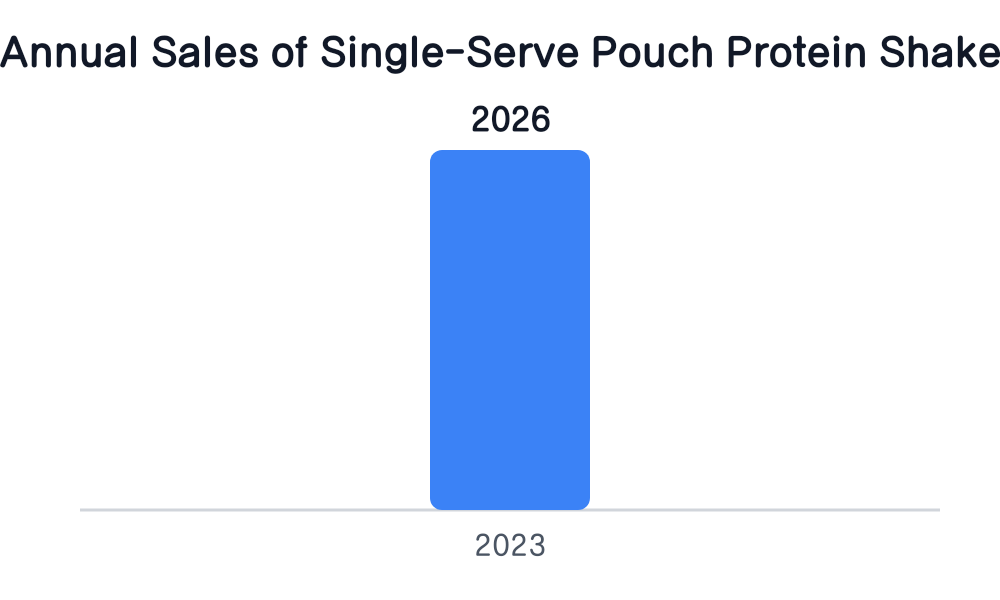
Consumer research tells a striking story: the estimated annual sales of single-serve pouch protein shakes jumped from approximately 3.7 billion won in April 2023 to 25.3 billion won by April 2026 — roughly a 6.8x increase in just four years. Protein shakes are no longer a niche product for hardcore gym-goers. They’ve become everyday consumer goods, as routine as grabbing a drink at a convenience store. Daiso’s 1,000-won shake has poured fuel on that fire.
This is about more than price competition. It represents a structural shift that lowers the barrier to entry for personal health management. When someone can try arginine for the first time at 1,500 won, and a protein shake costs less than a cup of coffee, wellness stops being something only people with disposable income bother with — it becomes part of everyone’s daily routine. What Daiso is really building isn’t a 1,000-won product. It’s a new consumer culture around health.
Sources
- “This is possible for 1,000 won?” — Sold out in 10 minutes, Daiso does it again — Herald Economy
- Sold out, sold out, sold out… 1,000 won for this? Daiso scores another hit — Korea Economic Daily
- “40-day creatine supply for 5,000 won” — Daiso expands into fitness supplements — News1
- Daiso posts record-breaking annual revenue of 4.5 trillion won — Betanews
- Pharmaceutical companies accelerating retail diversification — expanding into Daiso and launching new products — Daum News