Seoul Breaks All-Time Record for Consecutive Tropical Nights — 5 Sleep Hacks That Actually Work

You crack open the window at 11 p.m. and all that rushes in is thick, steamy air — no relief whatsoever. As of July 28, 2026, South Korea has already logged an average of 7.8 tropical nights nationwide this summer, the highest count since weather records began in 1973. Seoul has sweltered through six consecutive tropical nights, while daytime highs have soared to 33°C in the capital and a scorching 38°C in Daegu — numbers that surpass even the infamous summer of 1994. If you’ve been lying awake staring at the ceiling, you’re not alone. Here’s why this summer is so brutally hot, and what you can do tonight to actually get some sleep.

Why Is This Summer Breaking Records?
The short answer: two massive high-pressure systems have teamed up to trap heat over the Korean Peninsula. The North Pacific High is parked in the mid-to-upper atmosphere, and on top of that, the Tibetan High is pushing down from above — a phenomenon meteorologists are calling a “double heat dome.” Together, they pump in hot, humid air while blocking any escape route for heat at night. Water vapor, the most potent natural greenhouse gas, absorbs the infrared radiation that the ground tries to release after sunset, effectively short-circuiting the natural cooling process. The result? Heat alerts have been upgraded from advisories to full warnings across southeastern Seoul, northeastern Seoul, and Daejeon, while areas in South Gyeongsang Province — including Changnyeong, Uiryeong, and Yangsan — remain under the highest-tier extreme heat warning with temperatures hovering near 39°C.
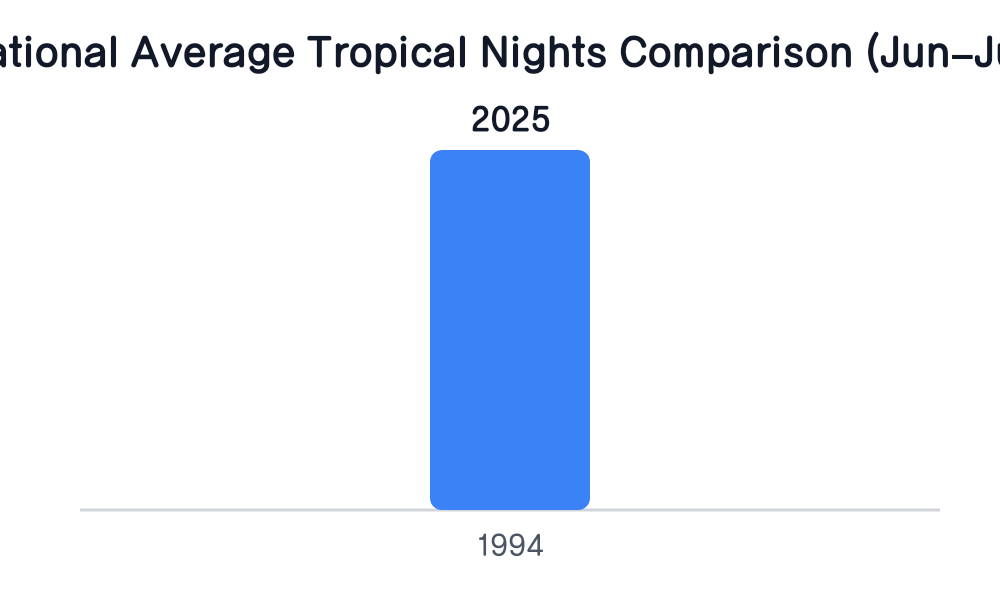
Korea Meteorological Administration data covering 62 observation stations from June 1 through July 26 puts the national average tropical night count at 7.1 days for that period — a 54-year record that beats the same stretch in 1994 (6.5 days) and last year (5.9 days) by a clear margin.
What’s even more alarming is that the worst may not be here yet. When temperatures stay elevated overnight, each new day starts from a higher baseline — meaning afternoon peaks just keep climbing. Daegu is forecast to hit 39°C again next week, and forecasters warn there will be no real relief until mid-August.
Empty Streets and Crowded Malls: How the Heat Is Changing Daily Life
Morning feels like a sauna, with apparent temperatures already approaching 30°C before most people even leave for work. The entire country is under some form of heat advisory, and midday outdoors in the southern regions is effectively off-limits. News cameras are catching eerily empty streets, while museums, supermarkets, and movie theaters are packed with people hunting for air conditioning. This isn’t just a temporary inconvenience — it’s a signal that the climate crisis is fundamentally reshaping how people move through their daily lives.
The heat season’s human cost has also been sobering. On May 15, 2026 — the very first day of the government’s heat-related illness surveillance system — an elderly man in his 80s died in Seoul, setting the earliest heat fatality on record. All 516 emergency rooms nationwide are now tracking heat-illness cases in real time through September 30. Elderly people, pregnant women, and anyone with chronic conditions are urged to take precautions even when no official heat warning is in effect.
The Science Behind Why You Can’t Sleep When It’s Hot
A tropical night is defined as one where temperatures never dip below 25°C — and that one threshold makes an enormous difference for sleep quality. Your body needs to drop its core temperature by about 1–2°C in the two hours before sleep to trigger drowsiness. When the ambient temperature stays above 25°C all night, that natural cooling process simply can’t happen. The knock-on effect is significant: research shows that prolonged heat exposure reduces both slow-wave (deep) sleep — the stage critical for physical recovery — and REM sleep, which plays a key role in memory consolidation and mental performance. Less of both means you wake up exhausted no matter how many hours you spend in bed.
5 Sleep Hacks to Survive a Tropical Night — Starting Tonight
- Set your AC to 26°C and activate sleep mode: Cranking the AC down to 22–23°C might seem like the obvious move, but it can actually wake you up in the early hours when your body temperature naturally hits its lowest point — around 3–5 a.m. — and the room feels too cold. Set it to 26°C, turn on sleep mode, and consider scheduling the unit to switch off just before that pre-dawn dip. Your body stays comfortable and your electricity bill thanks you.
- Aim for 50% humidity: High humidity makes a warm room feel dramatically hotter and disrupts deep sleep. Run a dehumidifier to bring indoor humidity down to around 50% — the sweet spot for restful sleep. You’ll notice the difference immediately.
- Take a lukewarm shower before bed: Medical experts consistently recommend a 10-minute lukewarm shower about 30–60 minutes before sleep. The warm water actually triggers a post-shower cooling effect that helps lower core body temperature. Avoid hot showers — they do the opposite.
- Flip your fan around if you don’t have AC: Point the fan toward an open window so it pushes hot indoor air outside rather than just circulating it. This draws in comparatively cooler outdoor air from another opening. Bonus tricks: place a bowl of ice water in front of the fan for a makeshift cooling mist, or lay a damp towel on your neck and inner wrists to bring your core temperature down quickly.
- Switch to breathable summer bedding: Bedding that traps moisture turns your mattress into a hot, damp cocoon — one of the fastest ways to destroy sleep quality. Swap to lightweight, moisture-wicking summer sheets and a thin cover. It sounds basic because it is, and it works.
Won’t Running the AC All Night Spike My Electricity Bill?
Not necessarily — if you’re smart about it. Using sleep mode at 26°C lets the unit automatically adjust temperature by a degree or two throughout the night, keeping you comfortable without running at full blast for eight hours straight. Before you turn the AC on, open all the windows for five minutes to flush out the heat that has built up indoors during the day; pre-cooling a room that’s already 35°C inside takes far more energy than maintaining a room that’s been ventilated first. And don’t overlook your filter — a clogged filter can cut cooling efficiency by 20–30%, so a quick clean could quietly shave a meaningful amount off your monthly bill.
This summer isn’t about toughing it out — it’s about managing the heat strategically. Tropical nights aren’t just uncomfortable; they’re a compounding threat. Poor sleep weakens your immune system, impairs judgment, and — especially for vulnerable groups — can escalate into serious heat illness. Even implementing one of the tips above can make a real difference tonight. Don’t wait until August gets worse.
Sources
- Seoul Heat Advisory Upgraded — Record Tropical Nights Continue – Nate Weather
- This Summer’s Tropical Night Count Hits All-Time High — And the Worst Is Yet to Come – Financial News
- [Y Transcript] This Summer’s Tropical Nights Rank No. 1 in History — National Average Reaches 7.1 Days – YTN
- The Secret of People Who Sleep Well Even on Tropical Nights: 5 Summer Sleep Routines – GQ Korea
- 2026 Heat Illness Prevention Guide — First Death Recorded, Check This Now – Govinfo