Pirates Strike Again in the Gulf of Aden — Why South Korea Scrambled a Warship
On July 17, 2026, armed intruders stormed the chemical tanker Asana as it quietly sailed through the Gulf of Aden. The vessel had no armed security team on board to resist them. Within hours, word spread through international wire services: a South Korean naval warship had received the distress signal and was racing to the scene. The Gulf of Aden. Somali pirates. South Korea’s Cheonghae Unit. It sounds like a headline from over a decade ago — but it’s happening all over again in 2026.

What Happened: The Hijacking of the Asana
According to the United Kingdom Maritime Trade Operations (UKMTO), a report came in around 11:00 a.m. local time on July 17 that “unauthorized personnel” had boarded the chemical tanker Asana approximately 65 nautical miles (about 120 km) south of the Yemeni port city of Al Mukalla. British maritime security firm Ambrey identified the armed group as suspected Somali pirates, adding that the vessel had no separate armed security team on board to repel the boarding. The South Korean naval vessel was the first to receive the distress signal and head to the scene.
The Korean warship referenced by Ambrey is almost certainly the Wang Geon (DDH-978), a 4,400-ton destroyer deployed as part of the 48th rotation of South Korea’s Cheonghae Unit. The ship departed Busan Naval Base on May 15 and is currently operating in the Gulf of Aden on counter-piracy and merchant vessel protection missions. It carries a crew of roughly 260, including special operations forces (UDT/SEAL), naval aviation personnel, and Marine Corps detachments.
Somali Pirates Are Back — and More Dangerous Than Before
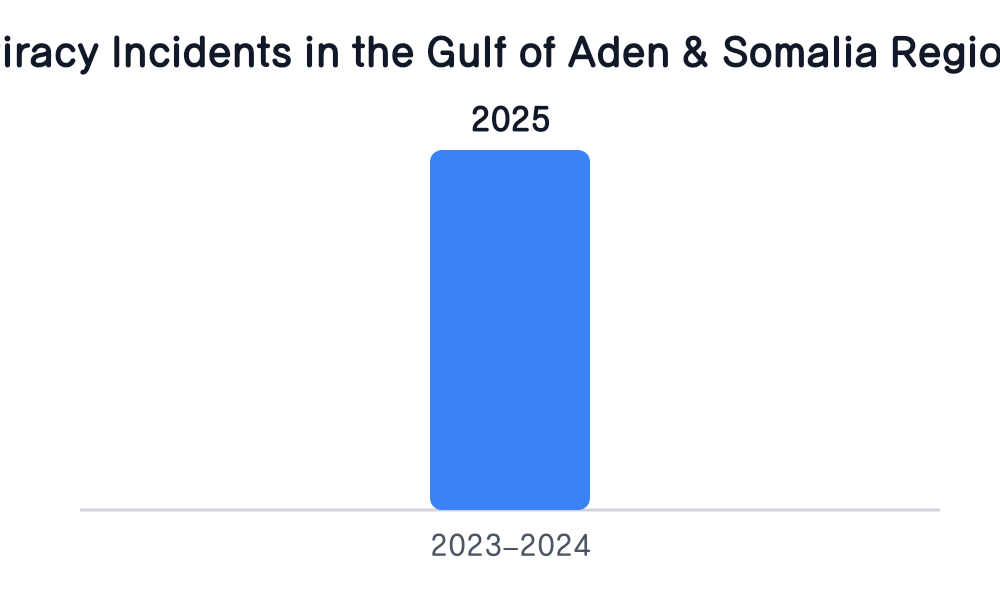
Somali piracy never truly went away. According to the International Maritime Bureau’s Piracy Reporting Centre (IMB PRC), recorded piracy incidents in the Gulf of Aden and Indian Ocean stood at just 4 cases in 2023–2024, rose to 5 in 2025, and have already hit 6 through May 2026 alone — a sharp upward trend. The Combined Maritime Forces, which patrols the Red Sea, Gulf of Aden, Indian Ocean, and Gulf of Oman, has elevated its threat assessment to a “serious” level.
What makes this moment especially alarming is the possibility that this isn’t ordinary piracy at all. A growing number of analysts warn that Yemen’s Iran-backed Houthi rebels and Somali pirate networks have forged a working partnership. Ido Shalev, Chief Operating Officer of Israeli defense firm RTCOM, described the arrangement bluntly: “The Houthis provide geopolitical cover and advanced GPS intelligence, while Somali operatives supply the manpower to physically seize vessels.” In other words, the Houthis are the brains, the pirates are the boots on deck.
Geopolitics set the stage for this arrangement. Escalating U.S.-Iran tensions have destabilized the Strait of Hormuz and dramatically raised the strategic value of the Red Sea corridor. With multinational naval forces stretched thin responding to Houthi missile and drone threats, a security vacuum has opened up — and pirates are exploiting every inch of it.
The Cheonghae Unit Arrived Better Armed This Time
The 48th Cheonghae Unit deployed with significantly upgraded counter-drone capabilities compared to previous rotations. Iran has been deploying combinations of suicide drones (UAVs) and underwater unmanned vehicles (UUVs) in Middle Eastern waters, and a fire aboard the HMM Namu near the Strait of Hormuz raised the possibility of a drone strike. In response, the Wang Geon‘s detection, jamming, and interception systems were reinforced before departure. Of the roughly 260 personnel on board, approximately 80 are veterans of previous Cheonghae deployments.
This unit has earned its reputation in these waters before. The 2011 “Dawn of the Gulf of Aden” operation — in which Cheonghae forces rescued all crew members of the hijacked freighter Samho Jewelry from Somali pirates — remains one of the most celebrated missions in South Korean military history. The outcome of the Asana incident has yet to be confirmed, but the fact that the Wang Geon is already en route speaks volumes about the seriousness of the situation.
Why This Story Matters Far Beyond the Gulf
The Gulf of Aden is one of the world’s most critical arteries for oil and cargo. When this waterway becomes unstable, energy prices and shipping costs rise — and those costs eventually land in the wallets of everyday consumers around the world, including in South Korea. The resurgence of Somali piracy, its suspected alliance with the Houthis, and the security gaps left by overstretched multinational naval forces have combined to make the Gulf of Aden more complex and more dangerous than it was a decade ago. Right now, South Korea’s destroyer Wang Geon is sailing straight into the middle of it.
Sources
- Pirates Board Tanker in Gulf of Aden — Korean Warship Heads to Scene — MBC News
- Another Vessel Hijacking Reported in Gulf of Aden — Korean Warship Dispatched (Full Report) — News1
- The Return of Somali Pirates: What Are the Options? — Korea Institute for Maritime Strategy
- Crisis at the Entrance to the Red Sea — Somali Pirates and Houthis Coordinate Ship Seizures — News1
- Cheonghae Unit 48th Rotation Departs — Possible Future Deployment to Strait of Hormuz — Yonhap News